

Updated on: 08.06.26
Caught Speeding in a School Zone? What You Need to Know in NSW
Speeding in a School Zone NSW: Fines, Demerit Points and Legal Options
If you have been caught speeding in a school zone in NSW, you are likely feeling anxious about what comes next. School zone speeding offences carry some of the harshest penalties in the NSW road rules — heavier fines, more demerit points, and a genuine risk of losing your licence. The good news is that you have options, and understanding the law is the first step towards protecting yourself.
This guide covers everything you need to know: how school zones work in NSW, the exact penalties you face, when and how speed cameras operate, whether you can appeal your fine, and how an experienced traffic lawyer can help you achieve the best possible outcome.
Learn more: Traffic Offences Overview
What Happens If You Are Caught Speeding in a School Zone in NSW?
Being caught speeding in a school zone in NSW triggers one of two enforcement pathways: an infringement notice (on-the-spot fine), or — for more serious offences — a court attendance notice. For most school zone speeding offences, you will receive an infringement notice in the mail, particularly if you were detected by a speed camera. This notice will set out:
- The exact offence date, time, and location
- The speed you were travelling and the applicable limit
- The fine amount payable
- The number of demerit points to be recorded against your licence
- Your options for paying, requesting a review, or electing to take the matter to court
You have 28 days from the date of the notice to pay the fine, request a review, or elect to have the matter dealt with by a court. For high-range speeding offences (more than 45 km/h over the limit), police may also impose an immediate licence suspension on the spot.
Important: Ignoring a school zone speeding fine is never a good idea. Unpaid fines in NSW are referred to Revenue NSW, which can suspend your licence, cancel your vehicle registration, or refer the debt to a collection agency.
School Zone Hours in NSW
One of the most common points of confusion — and one of the most frequently used grounds for disputing a school zone infringement — is exactly when school zone speed limits apply.
Standard Operating Times
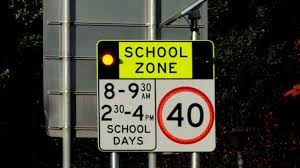
In NSW, school zone speed limits apply on school days during the following times:
- 8:00 am to 9:30 am (morning zone)
- 2:30 pm to 4:00 pm (afternoon zone)
These are the standard hours introduced across NSW, though some older or specially gazetted zones may have different hours. Always check the signage at your specific location.
Pupil-Free Days
This is where many drivers are caught out. Under NSW road rules, school zones do apply on pupil-free days. The speed limit is in force regardless of whether students are physically present at the school on that day. The only exception is if the school has displayed a sign indicating the zone does not apply — which is rare.
This means that even on a day set aside for teacher professional development, when no children are walking to or from school, you are still required to slow to 40 km/h (or the posted speed) during the gazetted hours.
School Holidays
School zone speed limits do not apply during school holiday periods. During the summer, winter, and term break holidays, the reduced speed limit is suspended. However, speed cameras in school zones may still be active outside of enforcement hours — they will only enforce the regular posted speed limit, not the school zone limit.
Flashing Lights
Many school zones in NSW are equipped with flashing yellow lights that activate automatically during school zone hours. These lights are an additional warning system, signalling that the school zone speed limit is currently in force.
Critically, the school zone speed limit applies whether or not the flashing lights are operating. A technical malfunction of the flashing lights does not exempt a driver from the reduced speed limit. However, non-functioning lights may be raised as a mitigating factor during a review or court proceedings.
School Zone Speed Limits Explained
The standard school zone speed limit in NSW is 40 km/h. In some locations — particularly those near primary schools with high pedestrian traffic or near school crossings in busy areas — the limit may be reduced to 30 km/h. Always observe the signage at each specific location.
The speed limit applies to all motor vehicles (cars, motorcycles, trucks, and buses) within the zone marked by signage — from the first sign to the sign marking the end of the zone. It does not matter whether children are visibly present. If you are within the zone during the gazetted hours, the limit applies.
NSW does not have a separate school zone speed limit for heavy vehicles. All vehicles must comply with the posted school zone limit.
School Zone Speed Cameras in NSW
NSW has one of the most extensive road safety camera networks in Australia, and school zones are a particular focus of enforcement. There are three main methods by which school zone speeding offences are detected.
Fixed Speed Cameras
Fixed speed cameras are permanently installed units located within or adjacent to school zones. These cameras operate 24 hours a day, 7 days a week and capture images of vehicles in both directions (in most cases). They are clearly signposted in advance with “Speed Camera Ahead” warning signs. Fixed cameras only apply the school zone limit during gazetted school zone hours — outside those hours, they enforce the regular posted speed limit.
Mobile Speed Cameras
NSW Police and Transport for NSW deploy mobile speed camera units across the state, including in and around school zones. Mobile cameras operate from marked or unmarked vehicles, or from static roadside positions, and are frequently deployed during school zone hours. Transport for NSW publishes general deployment areas, but does not give advance notice of specific daily locations. Mobile camera infringements carry the same penalties as fixed camera offences.
Police Enforcement
Uniformed police officers regularly conduct speed enforcement in school zones, particularly during peak drop-off and pick-up periods. Police may use handheld radar or laser devices, or operate speed enforcement equipment from patrol vehicles. If a police officer stops you for speeding in a school zone, they may issue an infringement notice on the spot, or — for high-range offences — immediately suspend your licence and confiscate your licence card.
Thinking about contesting your fine? Whether detected by a camera or a police officer, LY Lawyers can help you understand your options. Call us on 1300 595 299 for a free consultation.
Lean more: License Suspensions Appeals for speeding offences in NSW
School Zone Speeding Fines and Demerit Points in NSW
School zone speeding offences carry higher fines and more demerit points than standard speeding offences. The table below sets out the current penalties. Note that fines are periodically reviewed and adjusted — always verify current amounts with Transport for NSW or Revenue NSW.
NSW School Zone Speeding Penalties
| Speed Over Limit | Fine (Approx.) | Demerit Points | Double Demerit Pts |
|---|---|---|---|
| Less than 10 km/h over | $469 | 2 | 4 |
| 10–20 km/h over | $722 | 4 | 8 |
| 20–30 km/h over | $1,086 | 5 | 10 |
| 30–45 km/h over | $2,530 | 6 | 12 |
| More than 45 km/h over | $3,054+ | 7 | 14 |
* Fines are indicative and subject to change. Confirm current amounts at Revenue NSW.
Understanding Double Demerit Points
During declared holiday periods and long weekends in NSW, double demerit points apply to speeding offences, including school zone offences. The fine amount does not double — only the demerit point count doubles. Double demerit periods typically apply over Easter, Christmas and New Year, and NSW school holiday long weekends.
If you receive a school zone speeding fine during a double demerit period, the impact can be severe. A 10–20 km/h over offence that normally carries 4 points becomes 8 points — more than half the demerit threshold for an unrestricted licence holder.
Demerit Point Thresholds by Licence Type
| Licence Type | Suspension Threshold |
|---|---|
| Unrestricted Licence | 13+ points in 3 years |
| Professional Driver (unrestricted) | 14+ points in 3 years |
| Provisional P2 Licence | 7+ points in any period |
| Provisional P1 Licence | 4+ points in any period |
| Learner Licence | 4+ points in any period |
A single high-range school zone offence during a double demerit period could push a P2 driver well over their threshold, leading to an automatic licence suspension.
Learn more: License Appeal Demerit Points
Can You Lose Your Licence for Speeding in a School Zone?
Yes — and it can happen in more than one way.
Immediate suspension for high-range offences: If you are detected travelling more than 45 km/h over the speed limit in a school zone, you will receive an immediate licence suspension. Police can suspend your licence on the spot. If detected by a camera, Revenue NSW will issue a suspension notice when the infringement is processed.
Demerit point suspension: If the demerit points from a school zone offence cause you to reach or exceed your licence threshold, Transport for NSW will issue a suspension notice. This applies automatically through the demerit point system.
Court-imposed disqualification: If the matter goes to court, a magistrate has the power to impose a period of licence disqualification in addition to, or instead of, other penalties.
For provisional licence holders, the consequences are particularly harsh. The lower demerit thresholds mean that even a minor school zone infringement — say, 5 km/h over the limit in a double demerit period — can result in an automatic suspension.
Facing a licence suspension? You may have more options than you think. LY Lawyers specialises in licence appeals and helping clients minimise the impact of traffic offences. Contact us today for urgent advice.
Learn more: How to Appeal a License Suspension in NSW
Can You Appeal or Challenge a School Zone Speeding Fine?
Yes. NSW law provides several avenues for challenging a school zone speeding fine, depending on your circumstances.
Incorrect Signage
If the signage in the school zone was absent, obscured, damaged, incorrectly positioned, or otherwise non-compliant with the relevant road rules and standards, this may form the basis of a challenge. Under the Road Rules 2014 (NSW), school zone signs must be correctly placed and visible to a reasonable driver. If you believe the signage did not meet these requirements, you should photograph the signage as soon as possible and request a formal review through Revenue NSW with your evidence attached.
Exceptional Circumstances
Revenue NSW has a discretion to waive or reduce a penalty infringement notice where a person can demonstrate exceptional circumstances — situations beyond a driver’s control that caused them to commit the offence. For example, a genuine medical emergency (transporting someone to hospital), or a sudden and unforeseen vehicle malfunction. Exceptional circumstances reviews are not easy to succeed on, and “I didn’t know I was in a school zone” will not qualify. You need compelling, documented evidence.
Court Election Options
Every person who receives a penalty infringement notice in NSW has the right to elect to have the matter dealt with by a court. If you elect to go to court, the infringement notice is cancelled, and you must appear before a Local Court magistrate. You can plead not guilty (contesting the evidence) or guilty (seeking a Section 10 dismissal or other lenient outcome).
Section 10 dismissals (formally known as a dismissal without conviction under the Crimes (Sentencing Procedure) Act 1999) are a powerful option for drivers with a good traffic record facing a first or minor offence. If granted, a Section 10 means:
- No conviction is recorded on your criminal history
- No fine is imposed
- Demerit points are not recorded (the key benefit)
- Your licence is not affected
A court election is a significant decision. If you elect to court and the magistrate does not grant a Section 10, you could face a conviction and potentially heavier penalties. Legal advice before making this decision is strongly recommended.
Learn more: Section 10 Dismissal
Licence Appeal Options
If your licence has been suspended due to demerit points (as opposed to an immediate high-range suspension), you may be able to appeal to the Local Court. A successful demerit point licence appeal can result in your licence being restored, the suspension being overturned or reduced on the basis of exceptional hardship, or a good behaviour licence period as an alternative to suspension.
A good behaviour licence allows you to continue driving on the condition that you do not accumulate any further demerit points for a 12-month period. If you receive even one demerit point during that period, your licence is immediately suspended for double the original period.
Learn more: Licence Appeals Demerit Points
What Will the Court Consider?
If your school zone speeding matter proceeds to court, the magistrate will consider a range of factors in determining the appropriate penalty.
Factors that tend to work in your favour:
- A previously clean or good traffic record
- Evidence of genuine remorse and insight into the seriousness of the offence
- A compelling explanation for the circumstances (not an excuse, but context)
- Evidence that losing your licence would cause serious hardship to you or your dependants
- Completion of a Traffic Offender Program
- Character references from employers, community members, or professionals
- The degree to which the offence endangered others (lower speed = less danger)
Factors that tend to work against you:
- A prior history of speeding or traffic offences
- A high speed or significantly dangerous offence
- Children being present near the zone at the time
- An attitude of minimising the offence or lack of remorse
- Attempting to cast doubt on the evidence without proper basis
A skilled traffic lawyer can help you present your case in the best possible light and ensure the court has everything it needs to consider a lenient outcome.
Learn more: Traffic Offenders Program
Real Examples of School Zone Speeding Cases
The following are illustrative examples based on common fact patterns in NSW Local Court matters. Names and specific details are fictional, but the scenarios reflect real-world outcomes.
Case Example 1: Section 10 for a First-Time Offender
Scenario: Michael, a 34-year-old teacher, was detected travelling at 52 km/h in a 40 km/h school zone at 8:40 am by a fixed speed camera. This was his first traffic offence in over 10 years of driving. He faced a $722 fine and 4 demerit points.
Michael elected to take the matter to court with the assistance of a traffic lawyer. His lawyer prepared detailed submissions including character references, his employment record (which required driving), and evidence of remorse. The magistrate granted a Section 10 dismissal — no conviction, no fine, and no demerit points recorded.
Key lesson: A good traffic record and well-prepared submissions can make the difference between a conviction and a Section 10, even for a school zone offence.
Case Example 2: Licence Appeal on Hardship Grounds
Scenario: Sarah, a 28-year-old nurse who worked rotating shifts at a regional hospital, received a school zone fine for travelling 12 km/h over the limit. This tipped her over the demerit threshold, and Transport for NSW issued a 3-month licence suspension.
Sarah’s traffic lawyer lodged an urgent appeal in the Local Court, supported by a letter from her employer, evidence of the unavailability of public transport for her shift times, and a statutory declaration outlining the financial hardship a suspension would cause. The Court granted a good behaviour licence period in lieu of the suspension.
Key lesson: Licence appeals on hardship grounds can succeed when the evidence of genuine hardship is compelling and well-documented.
Case Example 3: Signage Challenge Leading to Fine Withdrawal
Scenario: David was photographed by a mobile speed camera travelling at 58 km/h in a 40 km/h school zone at 3:15 pm. On inspection, his lawyer identified that one mandatory school zone sign had been obscured by an overgrown tree and that the remaining signage did not provide adequate advance warning.
David’s lawyer submitted a formal review to Revenue NSW, attaching photographic evidence and a surveyor’s report setting out the relevant legal standard for school zone signage. Revenue NSW withdrew the infringement notice — no fine, no demerit points.
Key lesson: Signage challenges are technical and require strong evidence, but they can succeed with the assistance of a lawyer who understands what to look for.
How a Traffic Lawyer Can Help
Many drivers assume that if a speed camera has caught them, there is nothing to be done. This is not always the case. An experienced NSW traffic lawyer can assist you by:
- Reviewing the evidence — including camera calibration records, photos, and detection data — to assess whether there are any technical deficiencies
- Advising on your best option — whether to pay, request a review, or elect to court, based on your licence history, demerit point balance, and the strength of any available arguments
- Preparing court submissions — presenting your case to magistrates in the most favourable light, maximising your chances of a Section 10 or other lenient outcome
- Handling licence appeals — preparing the documentation and appearing in court on your behalf if your licence has been suspended or is at risk
- Negotiating with prosecutors — in cases where there are genuine deficiencies in the evidence or strong mitigating factors
The cost of legal advice is almost always less than the cost of losing your licence — particularly if your livelihood depends on driving. Call LY Lawyers on 1300 595 299 for a free, confidential consultation or contact us here.
Why Choose LY Lawyers
LY Lawyers is a Sydney-based criminal and traffic law firm with offices across NSW, including the Sydney CBD, Parramatta, Liverpool, Newcastle, Wollongong, and Gosford. Our traffic law team has extensive experience representing clients in school zone speeding matters, demerit point appeals, licence suspension appeals, and a wide range of traffic offences.
Why clients choose LY Lawyers:
- Available 24/7 — traffic offences don’t keep business hours, and neither do we
- Free initial consultation — speak to a lawyer about your situation before committing to anything
- Fixed fees available — no surprises with your legal costs
- Proven results — we have helped hundreds of NSW drivers protect their licences and avoid convictions
- Local expertise — we know the Local Courts across NSW and the magistrates who hear traffic matters
- Plain-English advice — we explain your options clearly, without unnecessary legal jargon
Call 1300 595 299 now, or contact us online to book your free consultation.
Frequently Asked Questions
What happens if you get caught speeding in a school zone in NSW?
If you are caught speeding in a school zone in NSW, you will receive a penalty infringement notice setting out the fine and demerit points for your offence. The fine is higher than for a standard speeding offence at the same speed. For offences more than 45 km/h over the limit, you may also face an immediate licence suspension. You have 28 days to pay the fine, request a review, or elect to have the matter heard in court.
How many demerit points do you lose for school zone speeding in NSW?
The number of demerit points depends on how far over the speed limit you were travelling. A minor school zone offence (less than 10 km/h over) attracts 2 demerit points. A 10–20 km/h over offence attracts 4 points. A 20–30 km/h over offence attracts 5 points. A 30–45 km/h over offence attracts 6 points. More than 45 km/h over attracts 7 points. During declared double demerit periods, all of these figures double.
Can you lose your licence for speeding in a school zone?
Yes. You can lose your licence through an immediate police suspension for high-range offences (more than 45 km/h over the limit), or through the demerit point system if the points from the offence cause you to reach or exceed your licence threshold. Provisional licence holders are particularly at risk because they have lower demerit thresholds (7 points for P2, 4 points for P1).
Do school zones apply on pupil-free days in NSW?
Yes. School zone speed limits apply on all gazetted school days, including pupil-free days, unless a sign at the specific school indicates otherwise. The reduced speed limit applies during school zone hours regardless of whether students are physically present at the school. This is a common source of confusion that has caught many drivers out.
Can a school zone speeding fine be appealed or challenged?
Yes. You have the right to request an internal review through Revenue NSW, or to elect to have the matter dealt with by a court. Grounds for challenge include incorrect or deficient signage, exceptional circumstances such as a medical emergency, and technical deficiencies in the detection evidence. In court, you may also seek a Section 10 dismissal, which can result in no conviction, no fine, and no demerit points.
Do speed cameras in school zones operate outside school hours?
Fixed speed cameras in school zones operate 24 hours a day, 7 days a week. However, they only apply the school zone speed limit during gazetted school zone hours (8:00 am to 9:30 am and 2:30 pm to 4:00 pm on school days). Outside those hours, only the regular posted speed limit is enforced.
Conclusion
Speeding in a school zone in NSW is a serious offence with real consequences — substantial fines, significant demerit points, and a genuine risk of losing your licence. The combination of high financial penalties, elevated demerit points, and strict enforcement means that even a momentary lapse in attention near a school can have lasting consequences for your ability to drive.
But being issued an infringement notice is not necessarily the end of the story. Whether your best option is paying the fine, requesting a review, electing to court for a Section 10, or appealing a licence suspension, understanding your rights and options is essential.
At LY Lawyers, we have helped hundreds of NSW drivers navigate school zone speeding matters and protect their licences. Our experienced traffic lawyers are available 24/7 to provide confidential, practical advice tailored to your specific circumstances.
Do not wait until the 28-day deadline is almost up. Call LY Lawyers today on 1300 595 299 or contact us online to book your free consultation.